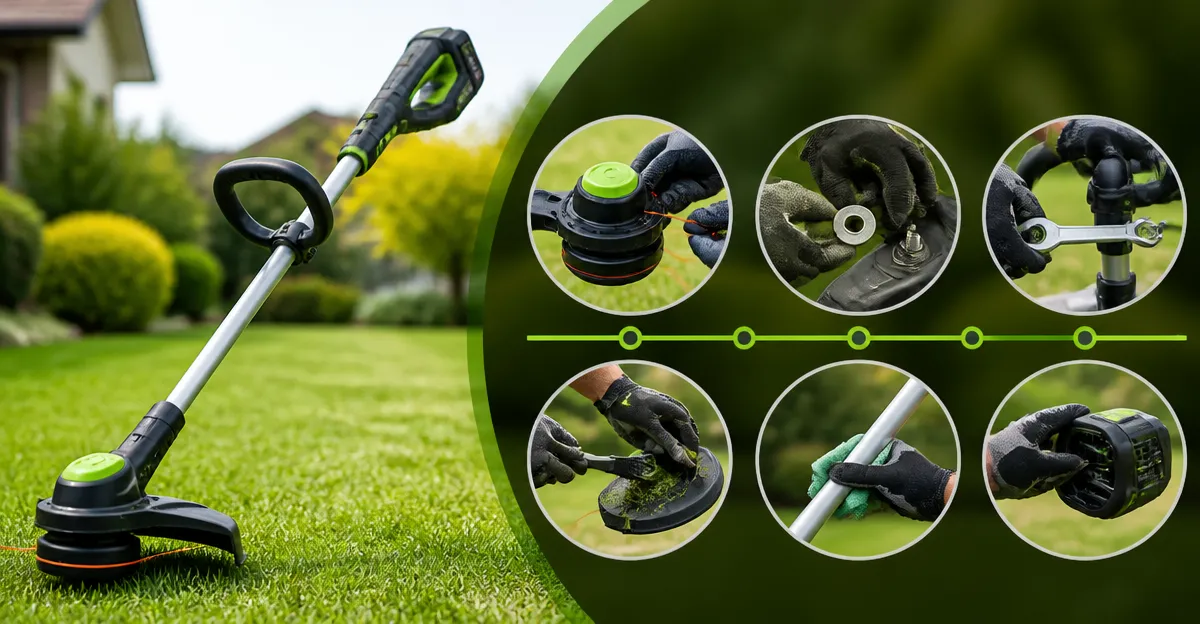
How to Reduce Vibration on Cordless String Trimmers: Quick, Easy Fixes & Preventive Maintenance
Introduction
One of the most common complaints among homeowners who own cordless string trimmers is excessive vibration. Vibration not only reduces comfort, it can cause fatigue and long‑term joint strain. This guide explains how one can identify the sources of vibration, apply quick fixes, and implement preventive maintenance to keep the tool operating smoothly. By following these steps, the reader will experience quieter operation, longer battery life, and a longer lifespan for the trimmer.
The techniques described are applicable to a wide range of battery‑powered trimmers, from entry‑level models to professional‑grade units. The guide also highlights specific products that simplify each task, providing price, rating and key features for informed decision‑making.
What You'll Need
- A set of metric Allen wrenches (typically 4 mm, 5 mm, 6 mm).
- Clean, dry cloth for wiping debris.
- Lubricating oil suitable for electric motor bearings.
- Optional anti‑vibration handle or shoulder strap.
- One of the recommended cordless string trimmers for testing and comparison.
Step 1: Inspect and Tighten Loose Fasteners
Loose bolts in the cutting head or handle assembly are a primary source of vibration. One should first disconnect the battery to avoid accidental start‑up. Using the appropriate Allen wrench, tighten the head‑mount screw, the handle clamp and any accessory brackets. Over‑tightening can strip threads, so apply firm pressure without exceeding the manufacturer's torque specifications.
The Craftsman V20 Cordless String Trimmer includes an adjustable handle that allows the user to set a comfortable grip angle, reducing the need for additional clamps. It is priced at $99.00, carries a 4.6‑star rating from 218 reviews, and offers a 13‑inch cutting swath that makes it easy to access the head for inspection.
By using a trimmer with a robust handle design, the user can achieve a more stable platform while tightening components, which in turn diminishes the transmission of vibration to the hands.
Step 2: Balance the Cutting Head and Line
Uneven line distribution creates an imbalance that amplifies vibration during operation. Remove the cutting head, unwind any excess line, and trim the line to a uniform length of approximately 10 inches. Re‑install the head, ensuring the line feeds evenly from both sides.
The Black+Decker 20V Max String Trimmer features an Automatic Feed Spool (AFS) that automatically dispenses line when needed, eliminating manual bumping and maintaining balance. Priced at $79.00 with a 4.4‑star rating from 9,736 reviews, this model reduces the likelihood of line‑induced vibration.
When the line is balanced, the motor experiences less resistance variation, resulting in smoother operation and lower overall vibration.
Step 3: Use Anti‑Vibration Accessories
Anti‑vibration handles and shoulder straps absorb shock and distribute weight more evenly. Attach a vibration‑dampening grip to the handle, then secure the optional shoulder strap around the shoulder. Adjust the strap so that the tool rests partially on the shoulder, allowing the arm muscles to relax.
The WORX 20V Cordless String Trimmer includes rubberized wheels that guide the edger and reduce vibration transmitted to the user. It is priced at $106.91, holds a 4.3‑star rating from 28,680 reviews, and its lightweight design (5.5 lb) makes it ideal for attaching a shoulder strap.
By combining a dampening handle with a shoulder strap, one can reduce hand fatigue and maintain a steady cutting path, especially on uneven terrain.
Step 4: Maintain the Motor and Battery
A well‑maintained motor runs smoother and generates less vibration. Periodically clean the motor vents with a dry cloth to prevent dust buildup. Apply a few drops of lightweight oil to the bearing caps, rotating the head slowly to distribute the lubricant.
The Greenworks 60V Cordless String Trimmer employs a brushless motor, which inherently produces less vibration than brushed counterparts. It costs $189.95, has a 4.3‑star rating from 184 reviews, and includes a 4.0 Ah battery that supplies consistent power, reducing torque spikes that can cause vibration.
Keeping the battery fully charged and allowing it to cool between sessions also prevents power fluctuations that contribute to uneven motor speed and vibration.
Step 5: Adopt Proper Operating Technique
Even with a perfectly tuned tool, improper technique can re‑introduce vibration. One should hold the trimmer with both hands, keeping the elbows slightly bent and the wrists neutral. Move the tool in smooth, overlapping arcs rather than rapid jerks. When edging, engage the Turn‑To‑Edge function and walk slowly to maintain a constant cutting depth.
The KOMASTY 20V Cordless String Trimmer offers a 180° rotatable handle and a 90° adjustable head, enabling the user to maintain an ergonomic posture on slopes and tight corners. Priced at $54.99 with a 4.2‑star rating from 718 reviews, it is lightweight and easy to maneuver, supporting the recommended technique.
Consistent, controlled movements minimize sudden accelerations that generate vibration, ensuring a smoother cut and a more comfortable experience.
Tips & Pro Tips
- Schedule a monthly inspection of all fasteners and replace any worn screws.
- When operating on hard surfaces, use the edger function sparingly to avoid excess impact.
- Store batteries at room temperature; extreme cold reduces performance and can increase motor strain.
- Consider adding a vibration‑absorbing pad under the handle if the tool lacks a built‑in dampening system.
- Always wear protective eyewear and hearing protection, even though cordless models are quieter than gas‑powered units.
Troubleshooting
| Problem | Possible Cause | Solution |
|---|---|---|
| Excessive vibration persists after tightening | Worn bearing or damaged motor shaft | Contact the manufacturer for warranty service or replace the motor assembly. |
| Vibration spikes when battery is low | Insufficient power causing irregular motor speed | Recharge the battery fully before use; keep a spare battery on hand. |
| Uneven cut lines | Line feed irregularities | Use a trimmer with automatic line feed, such as the Black+Decker model, to maintain consistent line delivery. |
Conclusion
By inspecting fasteners, balancing the cutting line, employing anti‑vibration accessories, maintaining the motor and battery, and using proper technique, one can dramatically reduce vibration on cordless string trimmers. The recommended tools—Craftsman V20, Black+Decker 20V Max, WORX 20V, Greenworks 60V, and KOMASTY 20V—each provide specific features that simplify these steps. Implementing these practices will result in smoother operation, less fatigue, and a longer service life for the equipment.
Frequently Asked Questions
What are the main causes of excess vibration in cordless string trimmers?
Loose bolts, worn bearings, unbalanced cutting heads, and uneven terrain are the primary sources of vibration.
How can I quickly tighten a vibrating trimmer without disassembly?
Use a 4‑6 mm Allen wrench to secure the head‑mount bolts and any handle clamps while the tool is off.
What type of oil should I use to lubricate trimmer bearings?
Apply a few drops of lightweight electric‑motor bearing oil or synthetic spray designed for high‑speed shafts.
Do anti‑vibration handles or shoulder straps really reduce fatigue?
Yes, they absorb shock and distribute weight, lowering hand strain during prolonged use.
How often should I perform preventive maintenance to keep vibration low?
Inspect and tighten bolts, clean debris, and re‑lubricate bearings after every 20‑30 hours of operation or monthly for frequent users.